Case study · Client work · Local government
Collier Township civic platform
A project tracker that shows residents where township projects stand while their input can still change them.
- 224stakeholder conversations
- 2.2 → 4.4of 5, residents' understanding once a proposal became a stage timeline
- 11 of 12testers aged 55 to 84 would use it for a real decision
AskedJan 2026
A township with public data asked for AI.
"Insightful Governance": use AI to help township staff work with civic data.
LearnedFeb to Apr
The information is public. Residents find it too late.
The information is public; residents cannot find it in time. 2 or 3 residents attend the meetings where decisions take shape, about 200 attend the hearing when nothing can change, and 35 of 39 survey respondents said they do not hear about decisions.
"Didn't think they had any information on there."
TurnedApr
The problem was timing, not analysis.
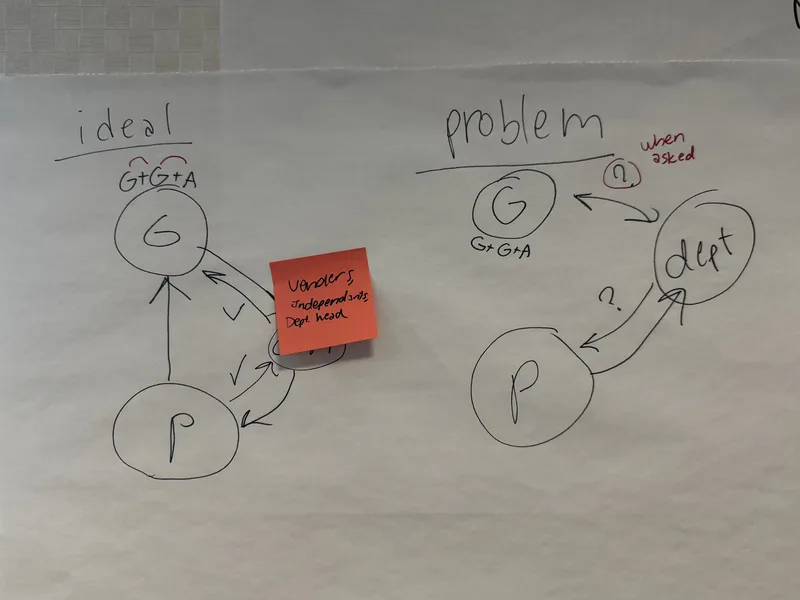
The Broken Cycle showed the input window closing before the township starts telling anyone. The goal moved from faster analysis to earlier reach, and AI moved backstage to the staff side.
The modelResidents heard about projects only weeks before the vote, after their input could change anything. Blueprint moves the telling to the start of the window.
- The brief, as asked
- The turn
- Found and made
- Set aside
- Evidence, one dot per count
MadeMay to Jul
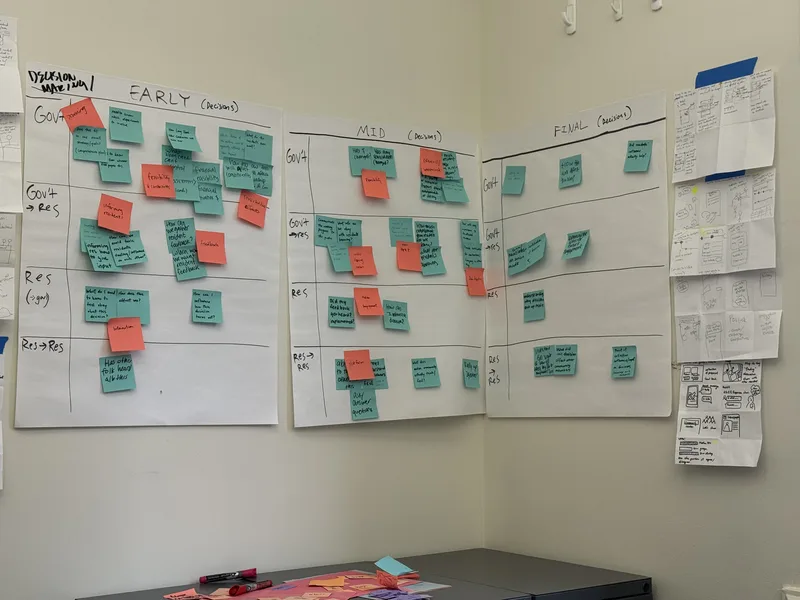
Eight prototypes. Evidence picked the two that shipped.
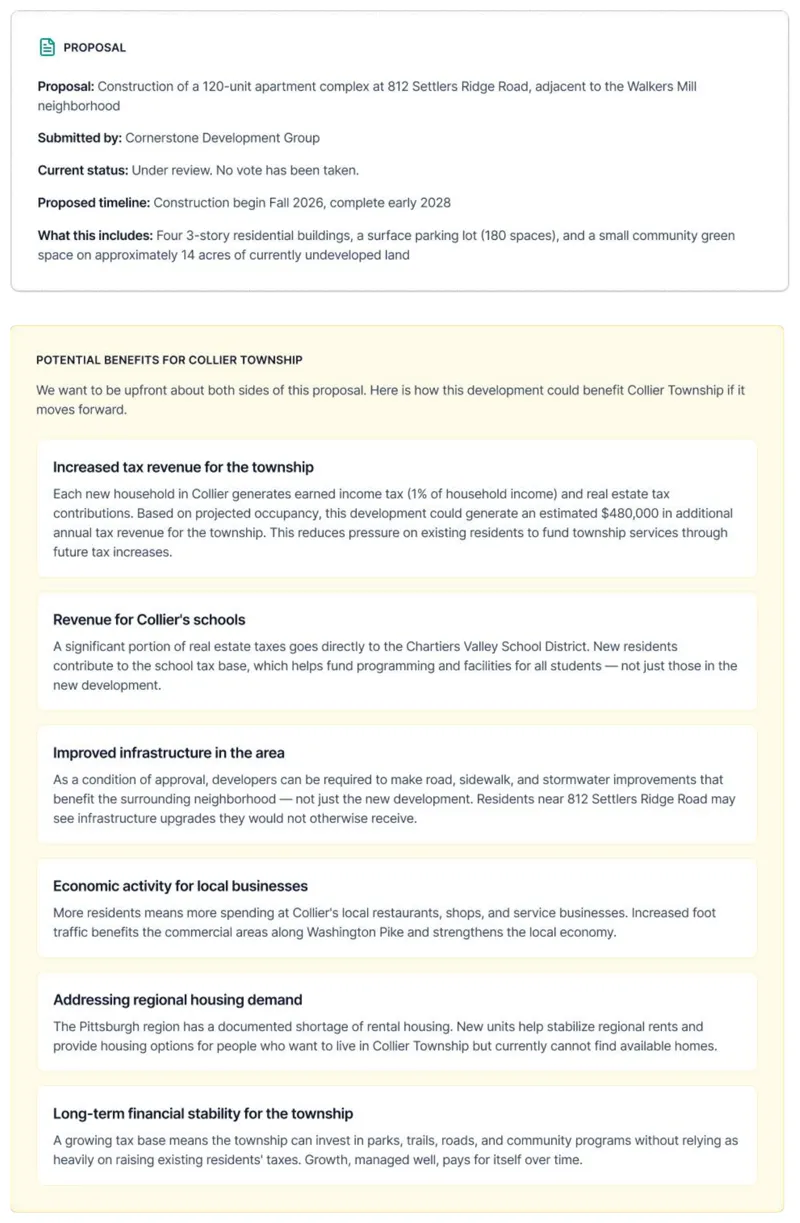
Eight prototypes, four of them mine. Evidence cut my rewards prototype (residents said rewards "cheapen" engagement) and set aside my map; my two coded one-stop-shops became the product. The timeline was rebuilt vertically, anchored at the current stage, after only 4 of 12 testers found next steps.
LandedJul 2026
Start manual. Add AI when the township is ready.
No AI on the resident side; a staff side that works fully before AI; a four-tier roadmap ($30K to $370K) so the township starts manual and adds AI over time. Presented to the Board of Commissioners and township staff. Delivered; adoption not yet decided.
Details
- My role
- Product manager and sole client contact across both semesters. Ran the weekly client meetings, led department-head research, built four of the summer prototypes including both coded one-stop-shops that became the product, shaped the final report and case study, and presented to the Board of Commissioners and township staff.
- Team
- Christy Yu (design and development), Bosi Li (design and development), Laila Dancy (UX research), Esther Suh (policy research, through April)
- Proof
- 224 stakeholder conversations: qualitative interviews, a 39-respondent survey and prototype test sessions across 8 concepts. Comprehension of a real proposal rose from 2.2 to 4.4 of 5 when it was shown as a stage timeline.
- Set aside
- AI on the resident side (cut: residents wanted "a real person" and the township has no IT staff to maintain it). My own rewards prototype (cut: rewards "cheapen" engagement). Ticketing and events (cut: the township's existing software already does them).
- Where it landed
- Delivered, not adopted. Working prototype, design system, print newsletter companion, four-tier roadmap ($30K to $370K).
- More numbers
- 4 build tiers, each useful on its own
- 9 of 9 department heads said little or no added work
More exhibits17 · show all
ThreadsPublic systemsTrust in AIAccess
Related
- Client work PLUS human + AI tutoringClient work · Access, Trust in AI
- Client work HRSA data dashboardClient work · Public systems, Access
- Academic AI OSAcademic · Trust in AI