Research study · Client work · Games
Blizzard: WoW Midnight player sentiment
Why returning World of Warcraft players hit friction in the first six weeks of Midnight, written so a designer knows what to fix.
- 28roadmap actions rated for effort, cost and impact
- 11review sites, plus forums and creators
- 6weeks of post-launch data
AskedJan to Feb 2026
Report the issues players have with Midnight, before and after launch.
An issue-based report of 6 to 10 issues across story, gameplay, quality and communication, before and after the Mar 2 launch.
LearnedFeb
Negative spikes outran the hype, and creators moved first.
Pre-launch conversation spiked around announcements, negative spikes outran the hype, and creators shifted first. I framed the market: WoW is PC-first in a mobile-led market and a subscription in a free-to-play world, yet it owns the niche of high-end group play.
TurnedFeb 27 to Mar 13
From how players feel to why veterans hit friction.
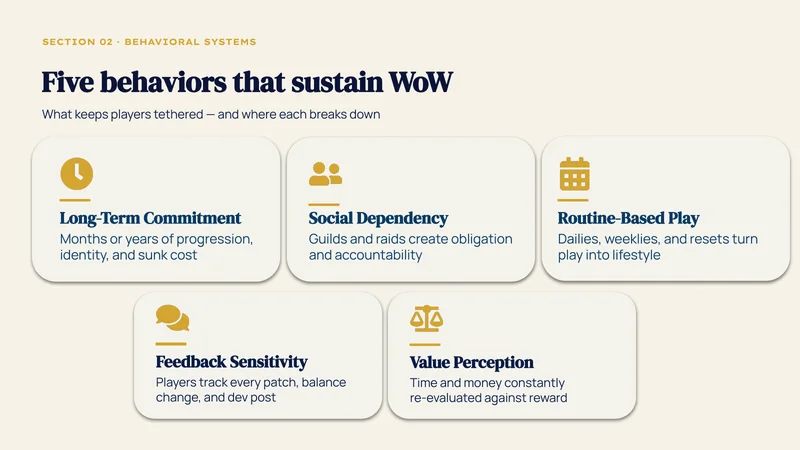
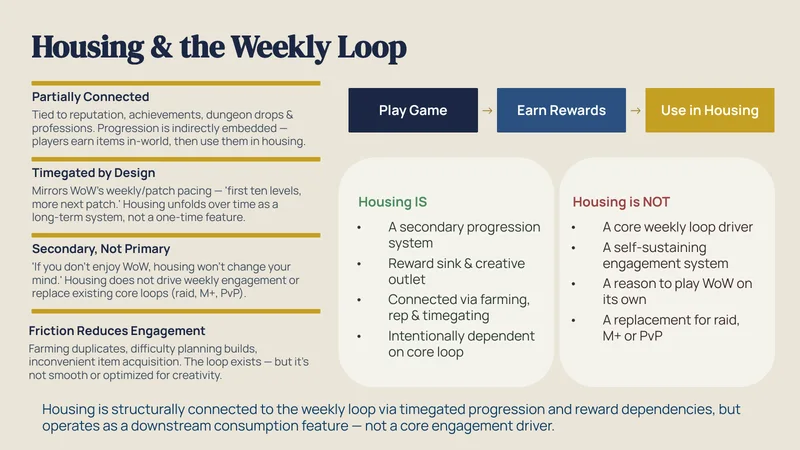
The client asked: "'they don't like the story'. But WHY?" We moved from broad sentiment to root causes in the first six weeks after launch, focused on returning veterans.
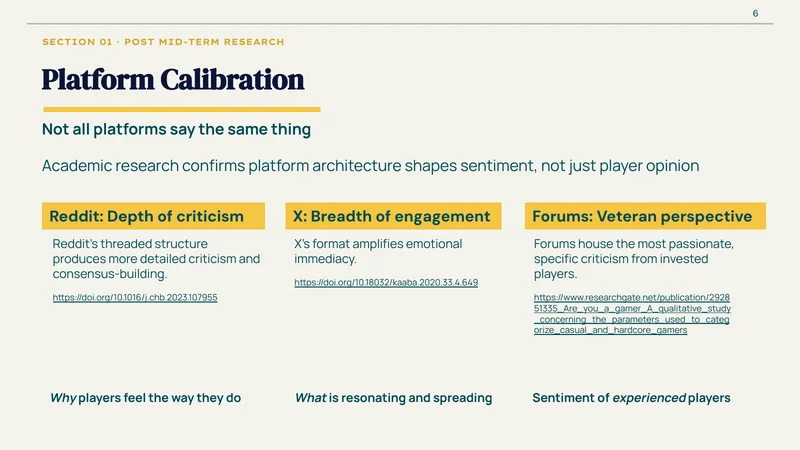
The modelSentiment showed what players felt but not why. Reading each platform as its own lens traced complaints to root causes: a strong foundation, with risks that were self-inflicted.
- The brief, as asked
- The turn
- Found and made
- Set aside
- Evidence, one dot per count
MadeMar to Apr
Measure what Blizzard fixed, not just what players said.
Each platform read as its own lens. Patch notes scraped to measure response, not just complaints: about 4 fixes a week after launch, at most 2 before. Three published promises checked against what shipped; all three broke within weeks.
LandedApr 22, 2026
Nine principles, a 28-action roadmap and two reusable models.
9 design principles, a 28-action roadmap in three tiers, and two reusable instruments for future launches. "Don't publish commitments you can't hold on day one."
Details
- My role
- Team lead and UX strategist for a team of six. Framed the market and competitive position, built the portfolio timeline, wrote most of the final report, including the design principles, roadmap and the two reusable models, and presented to WoW's lead UX research manager.
- Team
- Julie Kim (UX research and design), Ashley Ma, Zhexuan Ye and Philip Yin (data analysis and sentiment), Cody Lejang (data engineering)
- Proof
- Mixed methods across six weeks of post-launch data: Brandwatch sentiment, volume and emotion on Reddit and X; close reading of 11 review sites, forums and YouTube creators; scraped patch notes to measure Blizzard's own response rate.
- Set aside
- Pooling all platforms into one sentiment score (cut: each platform's structure shapes what people say). Broad pre-launch tracking across four pillars (cut after the midterm: it could not say why).
- Where it landed
- Delivered to WoW's lead UX research manager: 9 design principles, a 28-action roadmap in three tiers, and two reusable instruments (Expansion Lifecycle Sentiment Curve, Narrative Resonance Model).
- More numbers
- 6 person team, led
- 2 reusable instruments
More exhibits6 · show all
ThreadsPlayLegible data
Related
- Academic How I Play GamesAcademic · Play, Legible data
- Self-initiated The Primordial LatticeSelf-initiated · Legible data, Play
- Self-initiated Seven Questions, One Hidden ObjectSelf-initiated · Legible data, Play